Dumbbell Bench Press
Learn the dumbbell bench press with proper form to build chest and triceps through a full range of motion
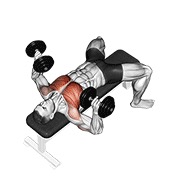 Watch animated demo (GIF)
How to perform
- Lie flat on a bench with your feet planted on the floor and a dumbbell resting on each thigh, then kick the weights up to shoulder level.
- Set your palms facing forward with the dumbbells above your chest and your arms extended.
- Inhale and lower the weights slowly out to the sides of your chest until your elbows reach roughly a 90-degree angle.
- Pause for a moment in the stretched position, then press the dumbbells back up as you exhale, driving them together slightly at the top.
- Keep your shoulder blades squeezed and your back flat, and repeat for the desired number of reps.
Muscles worked
The dumbbell bench press is a compound press that hits the pectorals hard while the triceps and front shoulders assist through the lockout. Because each arm moves independently, both sides have to work equally and the chest stays under tension through a wider range than with a barbell.
- Pectorals — the primary pressers, especially at the bottom of the lift
- Triceps — extend the elbows as the arms straighten
- Anterior deltoids — help drive the weights up from the start
Make it easier
Use lighter dumbbells and focus on a smooth, full range of motion, or switch to a machine chest press where the path is guided. Incline push-ups are another good way to build a base of pressing strength first.
Make it harder
Increase the weight, pause for two seconds at the bottom of each rep, or slow the lowering phase to a three-second count. Single-arm dumbbell presses add a stability challenge and a longer range of motion.
Common mistakes
Mistake: Dropping the dumbbells too far with loose shoulders. Fix: lower only to a comfortable depth and keep your shoulder blades retracted. Mistake: Banging the weights together at the top. Fix: stop just short of contact and keep constant tension on the chest. Mistake: Arching the lower back excessively. Fix: keep your spine neutral with your glutes on the bench and your feet driving into the floor.
FAQ
Are dumbbells better than a barbell for the bench press?
Dumbbells allow a deeper stretch and help fix left-right strength imbalances, while a barbell lets you move more total weight. Many lifters alternate both, using the dumbbell version as a volume or accessory exercise.
What angle should my elbows be at during the dumbbell bench press?
Keep your elbows at about 45–90 degrees from your torso as you lower the weights to the sides of your chest. Avoid flaring them out fully, which loads the shoulder joint and weakens the press.