Dumbbell Lateral Raise
How to do dumbbell lateral raises with proper form to build broader, stronger shoulders
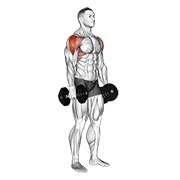 Watch animated demo (GIF)
How to perform
- Stand with your feet shoulder-width apart and hold a dumbbell in each hand at your sides, palms facing your body.
- Keep your back tall, your chest lifted, and your core braced.
- With a slight bend in your elbows, exhale and raise both arms out to the sides until they are parallel to the floor.
- Pause at the top with your wrists slightly lower than your elbows and your pinkies tilted upward.
- Inhale and lower the dumbbells slowly, taking about two seconds to return to your sides.
- Repeat for the desired number of reps, keeping the movement smooth and free of momentum.
Muscles worked
The lateral raise isolates the side delts, which abduct the arms away from the body, with the traps contributing near the top of the range of motion.
- Lateral delts — lift the arms out to the sides, doing the primary work
- Traps — assist as the arms approach shoulder height
Make it easier
Use very light dumbbells — or no weight at all — and raise only to chest height if full range feels heavy. Sitting on a bench also removes leg drive and hip sway.
Make it harder
Slow the lowering phase to a three-second count or pause for two seconds at the top. Lifting one arm at a time, or stopping just short of parallel to keep constant tension, also increases the challenge.
Common mistakes
Mistake: Using momentum and swinging the weights up. Fix: keep the torso still and initiate the raise with the shoulder, not the hips. Mistake: Going too heavy and shrugging the traps. Fix: drop the weight and stop at shoulder height with the arms parallel to the floor. Mistake: Raising the dumbbells above shoulder height. Fix: stop at parallel and keep the pinkies tilted up slightly. Mistake: Bending the elbows so much that the movement becomes a front raise. Fix: keep a small, fixed elbow bend and lift straight out to the sides.
FAQ
How heavy should my dumbbells be for lateral raises?
Light is right — most lifters need only 5–15 lb per hand. Heavy weights force the traps to take over and cause a shrugging motion, which defeats the purpose of the exercise.
Should I raise my arms all the way above my head?
No. Stop when your arms are about parallel to the floor. Going above shoulder level shifts the work to the traps and can stress the shoulder joint.