Hanging Leg Raise
How to do the hanging leg raise with proper form to build a powerful core and stronger hip flexors.
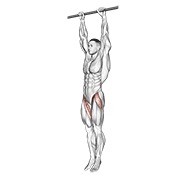 Watch animated demo (GIF)
How to perform
Hang from a pull-up bar with your arms fully extended, palms facing away, grip shoulder-width apart. Pull your shoulder blades down and brace your abs so your body is stable. Keeping your legs straight, lift them in front of you, exhaling as you raise. Continue until your legs are parallel to the ground or as high as you can manage without swinging. Pause at the top and squeeze your abs, then lower your legs slowly and under control to the starting position. Inhale on the way down and repeat for the desired number of reps.
Muscles worked
The hanging leg raise is a top-tier core move: your abs flex the hips toward your ribcage while the hip flexors raise the legs and your forearms grip the bar the whole time. The hanging position removes any support from your back, so nothing helps but your own strength.
- Abs — curl the pelvis upward at the top of the lift
- Hip flexors — raise the straight legs against gravity
- Forearms and grip — hold your body weight throughout
- Shoulders — keep the shoulder blades stable under the bar
Make it easier
Bend your knees and do hanging knee raises, or use a captain’s chair with arm pads to support your upper body. Lying leg raises on the floor with legs bent are a gentler way to build the same pattern.
Make it harder
Raise your legs all the way to the bar with toes touching, lower the legs with a slow three-second descent, or add ankle weights. Pausing at the top for two seconds is a simple way to add time under tension.
Common mistakes
- Mistake: Swinging your body to generate momentum. Fix: slow every phase down — if you swing, the movement is too fast or the range too large.
- Mistake: Arching your lower back as the legs come down. Fix: tuck your pelvis slightly and keep tension in your abs for the entire descent.
- Mistake: Shrugging the shoulders up to the ears. Fix: pack the shoulder blades down and keep your chest tall before starting each rep.
FAQ
Why can't I lift my legs very high on the hanging leg raise?
Limited range usually means weak hip flexors or tight hamstrings, not weak abs. Train hanging knee raises and lying leg raises first, and work on lifting the pelvis toward your ribs at the top of each rep.
How do I stop swinging during hanging leg raises?
Brace your core and keep your shoulders packed down before you start each rep. Lift slowly, pause at the top, and lower at the same controlled speed — the pendulum stops when every phase is slow.